
Blog
What We Look At Before We Touch Your Door
Minnetonka's housing runs 1957-2005 with heavy 1960s-70s stock and a severe cold climate band. Here's what we inspect first before any repair quote.
What Is Going On
Most of the calls we get in Minnetonka trace back to the same thing: a door that's been fine for decades and then isn't. Housing across this service area went up mostly between 1957 and 2005, with the median build year sitting around 1977, and the bulk of it clustered in that 1960s-70s wave across the 52 named areas we cover, from the lake-close streets near Deephaven and Wayzata out toward Minnetrista and Independence. A door installed in 1968 and a door installed in 2001 fail in different ways. The older ones were built with lighter steel, smaller rollers, and torsion springs sized for a lighter panel. The newer ones carry heavier insulated sections on hardware that wasn't upgraded to match. Either way, by the time you call, the door has usually been telling you something for weeks - a grind on the way up, a shudder at the halfway mark, a opener that strains before it quits. We don't start with the opener. We start with what's holding the weight.
What to Check
First the springs - tension, wear, and whether the size actually matches the door, which matters a lot on the older 1960s and 70s builds where a previous owner may have swapped a spring without matching the door's actual weight. Second, the cables and the drums they wind onto; on original hardware from that era, fraying often hides at the drum, not where you can see it from the floor. Third, the rollers and track alignment - steel rollers on 50-year-old track wear the rail itself, not just the roller. Fourth, the bottom bracket and the hinges nearest it, since that's where cold-weather metal fatigue shows up first. Only after those four do we look at the opener, because a struggling opener is usually a symptom of a heavy, unbalanced door, not the cause. On the newer end of the housing stock, insulated panels with factory weatherseal, the checklist shifts toward the seal and the photo-eye alignment instead.
How Local Conditions Play In
This area sits in a severe cold climate band, and that's not a seasonal inconvenience here - it's a structural fact that shapes every one of the 229,051 households and 112,905 owner-occupied houses across the territory we run trucks through. Steel contracts in deep cold, torsion springs lose a measurable amount of lift, and lubricant that was fine in September turns thick by January. On a 1960s-build door with original hardware, that combination is what turns a minor imbalance into a snapped cable on the coldest morning of the year. We see the pattern repeat on the older stock near Woodland, Long Lake, and Orono just as much as on newer builds farther out toward Chanhassen and Victoria - the climate band doesn't care what decade the house was framed in, but older springs and seals have less margin left to absorb the cold.
What You Pay
We don't quote a number until we've seen the door, because a torsion spring swap on a straightforward 1980s double door and a full rebuild on an original 1960s single door with seized hardware are not the same job. What we can tell you is that in an area with a median household income of $109,722, most owners we talk to choose a proper repair or replacement over a cheap patch that fails again in a year - the math works out better over time. One honest limit: for the oldest doors from the 1957-1965 build years, we sometimes don't have the matching spring size or bracket on the truck, since that hardware isn't stocked the way current parts are. That can mean a special order and a second visit, and we'd rather tell you that up front than pretend otherwise.
Questions
Common questions
Why did my garage door spring break in the middle of winter?
Cold steel loses some of its lift, and in this severe-cold climate band that loss is real, not imagined. A spring that was marginal in October can be the one that snaps in January. It's more common on older torsion springs from the 1960s-70s housing wave, since they've had decades of cycles plus years of winter stress working against them.
Is my door's hardware original to the house?
Often, yes, especially on homes built before the 1980s. A lot of Minnetonka's housing stock dates to that 1960s-70s era, and plenty of those doors still run on their original springs, drums, and track. We check the hardware stamps and wear pattern before assuming anything's been replaced.
Do you carry parts for older doors on the truck?
Usually, but not always. Current hardware is stocked widely; spring and bracket sizes from houses built in the late 1950s through mid-1960s sometimes aren't. If that's your door, we'll tell you on site whether it's a same-visit fix or a special-order part.
Recommendation
You Might Also Like
More garage door guides for Minnetonka homeowners.
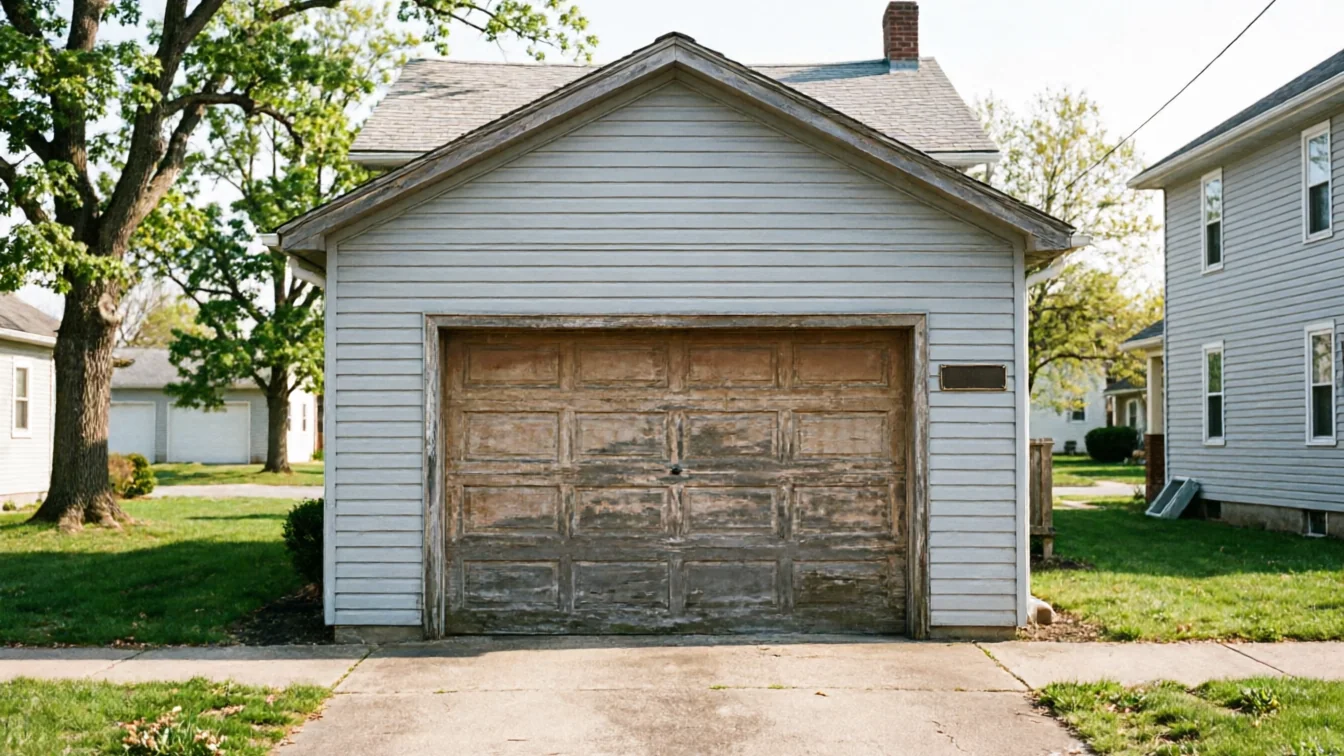
Why Minnetonka Garage Doors Act Up When It Gets Cold
A look at why Minnetonka's older housing stock and cold winters push garage door springs to fail, what to check first, and what actually drives repair cost here.
Read guide
Why Older Minnetonka Garages Fight the Cold
Minnetonka's housing stock dates mostly to 1957-2005, before today's insulation codes, leaving many garage doors uninsulated against severe cold winters here.
Read guide
When the Opener Dies and the Power Goes With It
Minnetonka homes built 1957-2005 face cold-climate opener strain and power cuts.
Read guideReady when you are
Need a garage door sorted in Minnetonka?
Minnetonka Garage Door Pros repairs and installs garage doors, springs and openers in Minnetonka, MN and the surrounding area.