
Bent track adds time
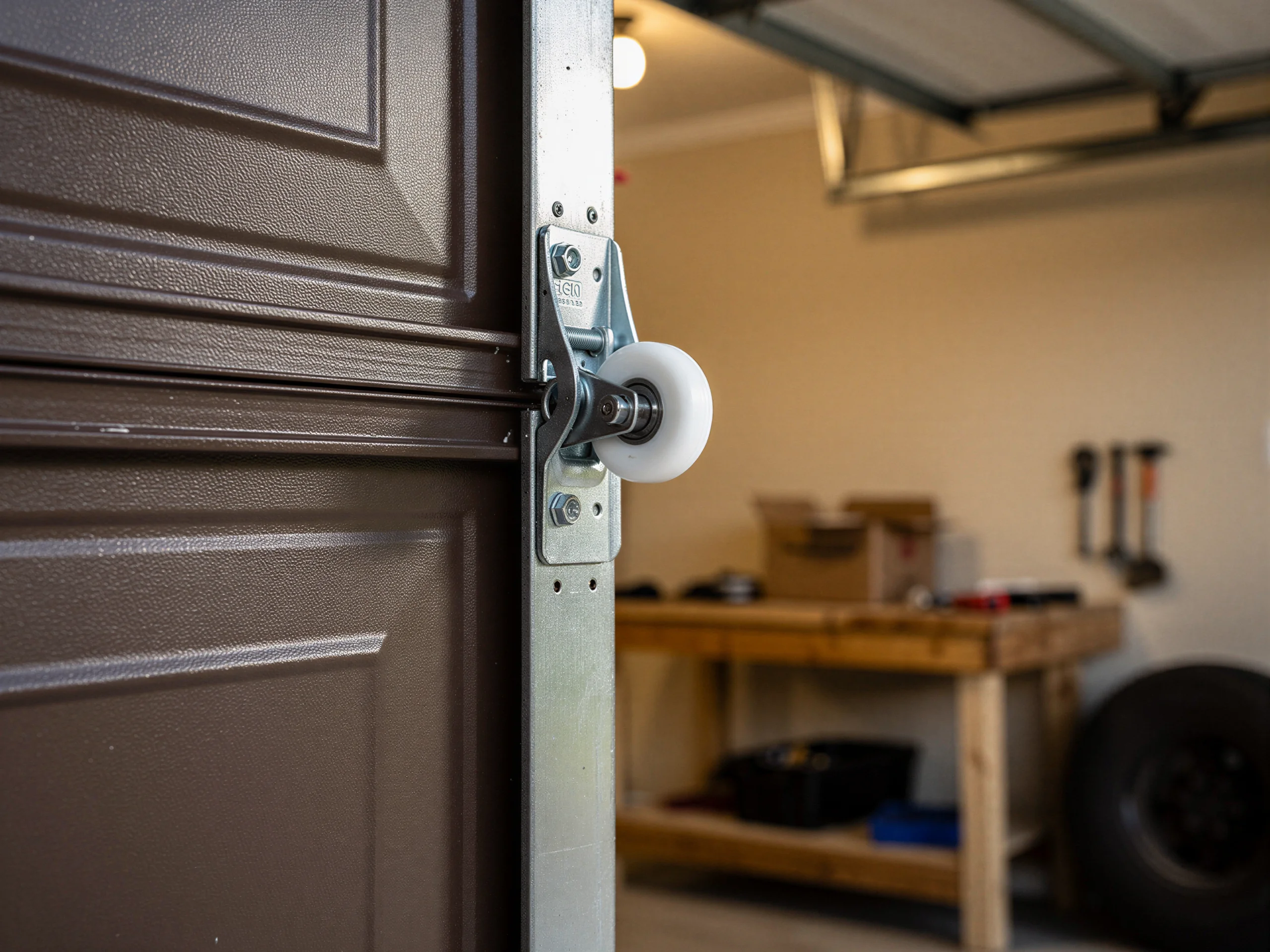
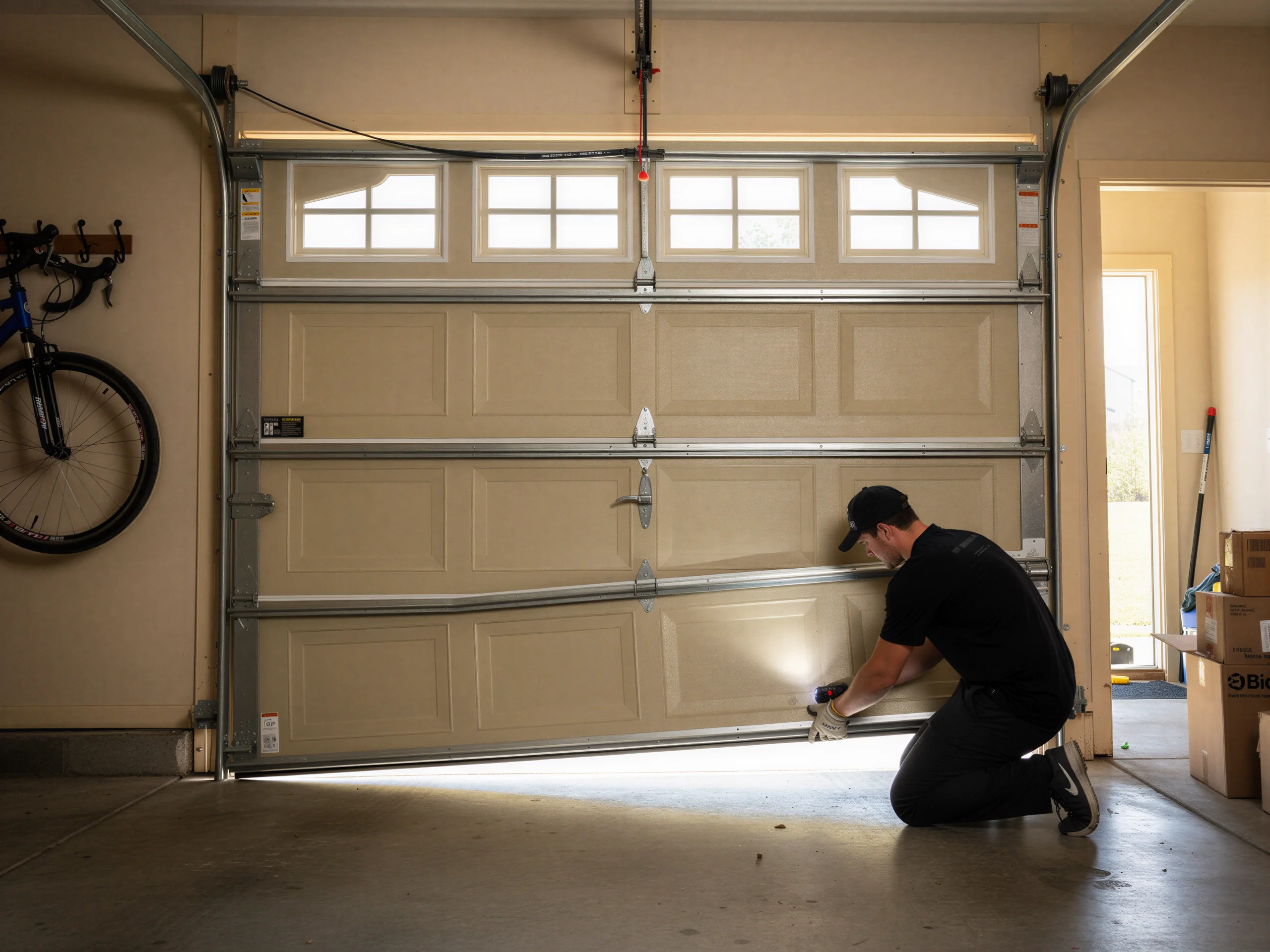
If the track itself is bent or gouged from a seized roller grinding against it, that adds time, since the track has to come off the jamb bracket and get straightened or replaced rather than just the roller.
Minnetonka, MN
Worn rollers on 1960s-80s Minnetonka garages fail faster in cold winters. Here's what causes it, how long the fix takes, and what it costs.
Local causes
Most houses in this service area went up between 1957 and 2005, with the bulk of the stock dating to the 1960s and 70s across the 52 named areas we cover. That era of construction leaned on steel rollers with stamped-metal stems and basic bearings - fine for a decade or two, but they weren't built for 50+ winters of hard freeze-thaw. This region sits in a severe cold climate band, and that matters more for rollers than almost any other door part. Cold makes the lubricant inside the bearing stiffen up, so the roller drags in the track instead of spinning free. Drag means more force on the stem, more wear on the track edge, and eventually a roller that chips, flattens on one side, or seizes outright. You'll hear it before you see it - a grinding or thudding as the door travels, usually worse on the first cold mornings of the season. Nylon rollers with sealed bearings handle this better than the stamped steel originals, which is why most replacements around here swap material, not just the part.
Timing
A straight roller swap - all ten rollers on a standard double door - is usually a single visit, done while the tech is already on site for a tune-up or diagnostic.
If the track itself is bent or gouged from a seized roller grinding against it, that adds time, since the track has to come off the jamb bracket and get straightened or replaced rather than just the roller.
We won't know which situation it is until someone's hands are on the door, because a roller that looks fine from the ground can be flat on the backside where it rides the track.
One honest limitation: if the stem is fused into the hinge from rust or old grease, drilling it out takes longer than the job itself, and that's not something we can quote blind over the phone.
Pricing
Pricing depends on how many rollers need replacing, whether you're going with steel or sealed nylon, and whether the track needs straightening or swapping alongside the rollers. We don't have a flat rate to quote here because a 4-roller touch-up and a full 10-roller nylon upgrade with a bent track are different jobs with different parts costs. What we can tell you: nylon rollers cost more up front than steel but run quieter and hold up better against the freeze-thaw cycle this area gets every winter, so for a door you plan to keep another decade, the upgrade usually pencils out. Ask for the breakdown in writing before the tech starts - rollers, labor, and track work listed separately, not bundled into one number.
Symptoms
The giveaway is noise that wasn't there before - a rattle, a thud, or a grinding scrape as the door moves, often loudest right where the roller rides past the bracket.
Some owners also notice the door catching or jerking partway through its travel, which is usually one bad roller dragging against the track rather than an opener problem. If you push the door by hand (with the opener disconnected) and feel resistance in the same spot every time, that's a strong sign it's a roller, not a spring or cable.
Don't ignore a door that's merely loud - a roller that's chipped or flattened puts uneven strain on the track and the opener motor, and letting it run that way for a season or two is how a $30 part turns into a bent track and a strained opener.
Across the roughly 229,051 households in this service area, roller noise is one of the most common calls we get once the first hard freeze sets in, right alongside spring and opener issues.
Questions
Cold stiffens the grease inside the bearing, so the roller drags instead of spinning freely in the track. That drag is what you're hearing. It's common in this climate band because of how many deep freeze-thaw cycles the hardware goes through each year, and it's worse on older steel rollers than sealed nylon ones.
You can, but if one roller wore out from age rather than an accident, the others on the same door are usually close behind. Spot-replacing saves money today but often means a second visit within a year or two once the next one fails.
Eventually, yes. A dragging or seized roller puts extra resistance on the door's travel, and the opener motor has to work harder to compensate. Left alone long enough, that strain can wear down the opener's gears faster than normal use would.
It can be. A lot of the homes in this area were built between the late 1950s and the early 2000s, and many garages still have their original steel rollers from that build. Steel rollers from that era weren't designed with sealed bearings, so they're more prone to the cold-weather drag that causes grinding and wear.
Explore more
Ready when you are
Minnetonka Garage Door Pros repairs and installs garage doors, springs and openers in Minnetonka, MN and the surrounding area.