
Extension spring containment
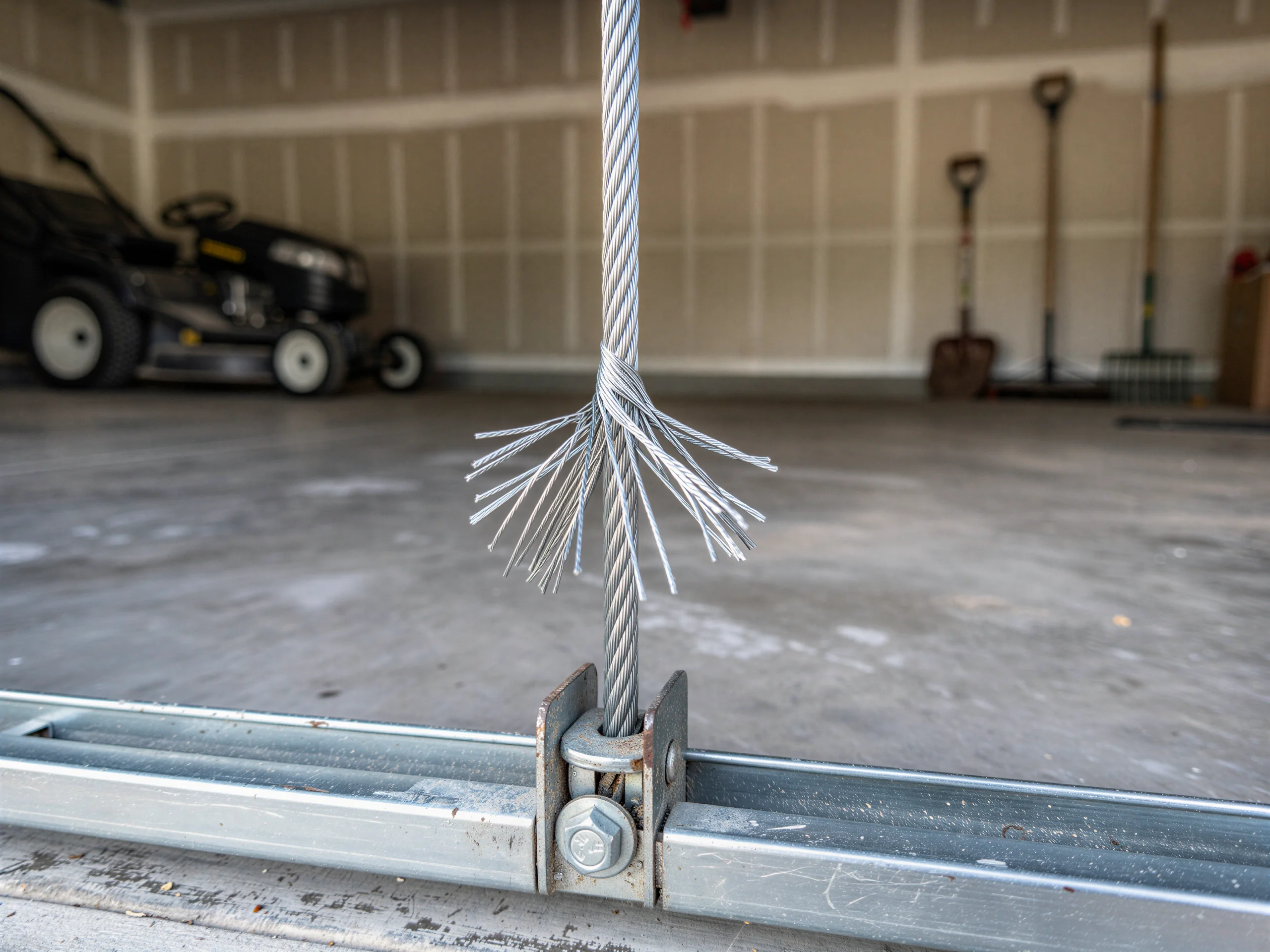
If your house still runs the original extension-spring hardware, a repair often means replacing parts that were never built with a containment cable at all - that changes the job, not just the price of a spring.
Deephaven, Minnetonka
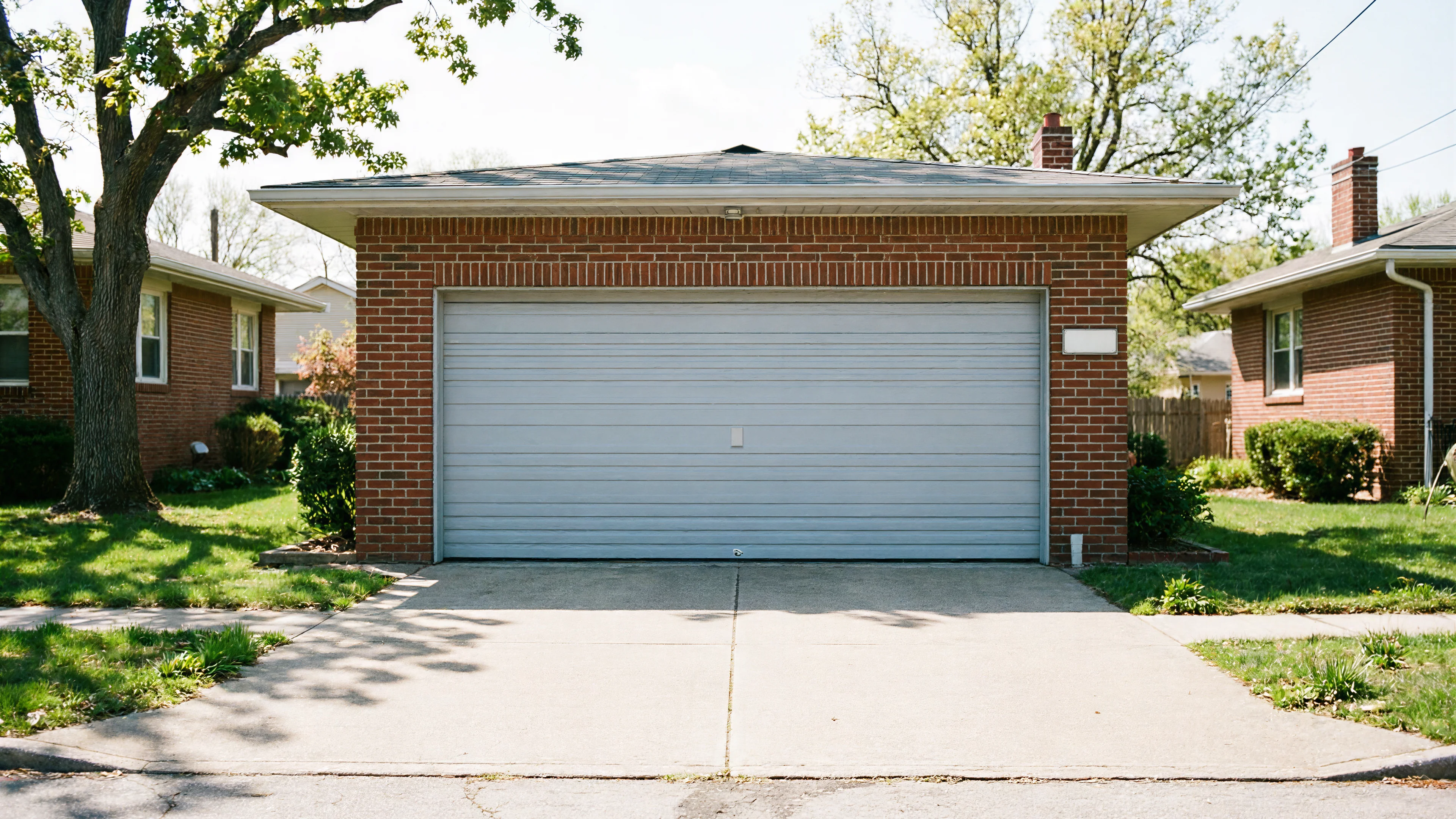
Deephaven homes mostly date to the mid-1960s, which means older extension-spring doors and track hardware not built for Minnesota's severe cold. We come from Minnetonka, 4 miles away.
Pricing
We don't quote a flat number over the phone, because what a Deephaven job costs depends heavily on what's actually behind the panel. A lot of this town's doors date to around 1965, which puts them right in the window before torsion springs with safety cables became the standard setup.
If your house still runs the original extension-spring hardware, a repair often means replacing parts that were never built with a containment cable at all - that changes the job, not just the price of a spring.
Deephaven's median household income sits well above the wider service area, and we see that reflected in the calls: more owners here choose a full hardware upgrade - torsion conversion, new track, insulated panel - over a patch job on 60-year-old parts, especially once a spring or cable has already failed once.
That's a decision we'll walk through with you on site, not push on you over the phone. We're honest about the tradeoff: a bare spring swap is cheaper up front, but if the drum, bearing plate, or track on a door this old is already worn, you're paying labor twice. We'll tell you which situation you're in before we start, not after.
Local causes
The fault pattern in Deephaven starts with the build year. Most of the housing here went up around 1965, squarely inside the broader 1957 to 2005 range for the service area but on the early end of it - meaning original garage hardware, where it survives, is pushing six decades of use. That's extension springs mounted along the horizontal track rather than torsion springs over the header, and often no safety cable running through the spring coil at all.
Layer Minnesota's severe cold on top of that. Steel contracts and spring steel fatigues faster through repeated freeze-thaw cycling, and hardware from the mid-1960s wasn't engineered with today's cold-rated coil specs in mind. We see the two problems show up together: a spring that's already near the end of its working life, overstressed further by a hard winter morning when the oil in the bearings has gone stiff.
The second common failure is the track itself bending or racking out of alignment - on an older narrow steel track, years of a door running slightly off-level compounds quickly. It's rarely one event; it's decades of small cold-weather strain on hardware that was never meant to last this long in the first place.
Booking
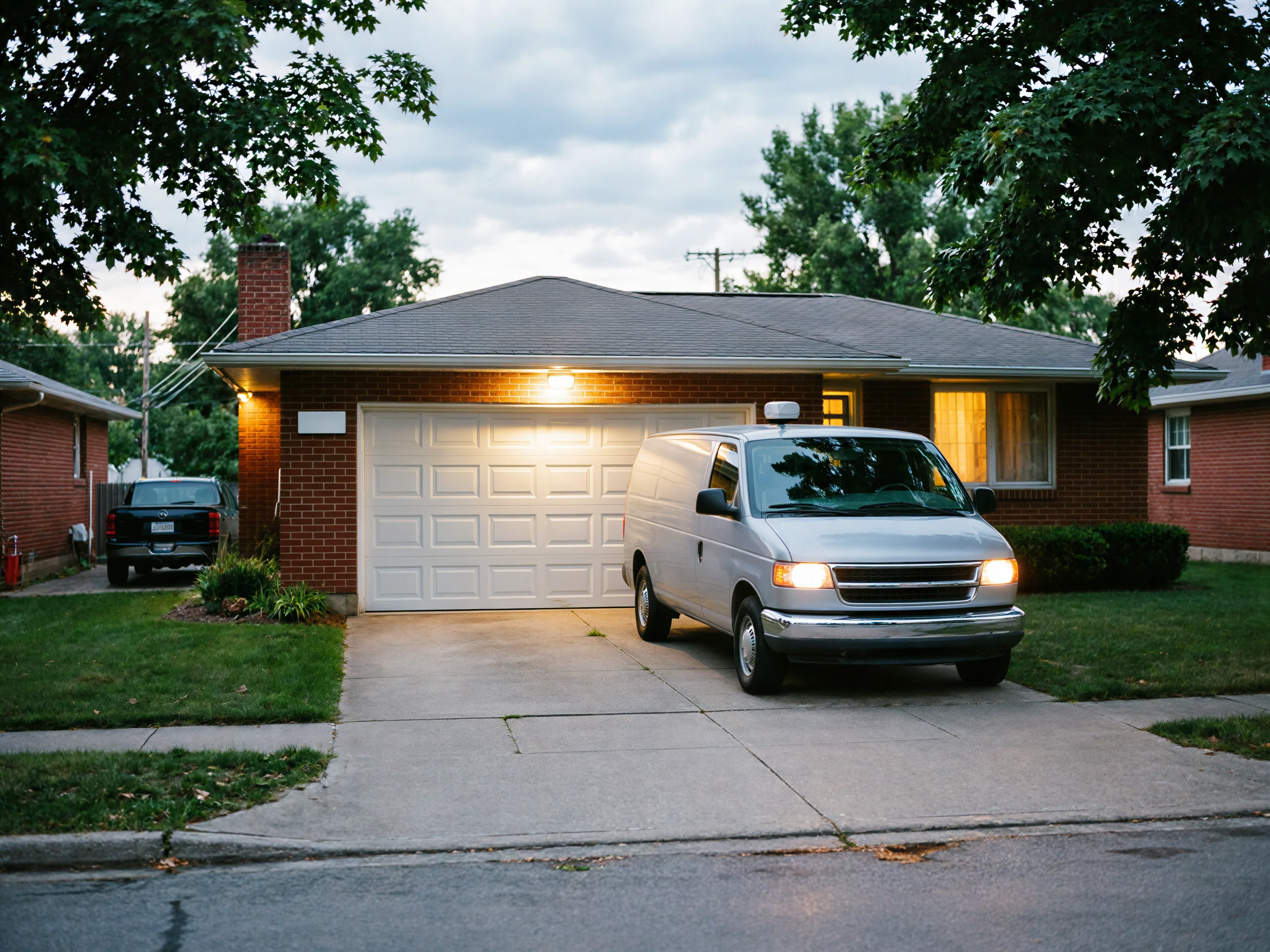
We run out of Minnetonka, about 4 miles from Deephaven, so there's no separate branch or crew dedicated to this side of the lake - it's the same trucks and the same scheduling as the rest of the service area.
Call and describe what's happening: a door that won't open, a spring that's snapped, a track that's visibly bent. That tells us what to load on the truck before we leave. If you know roughly when your house was built, mention it.
On a street full of mid-1960s homes, that single detail often tells us more about what we'll find than a description of the symptom does - it points us toward extension-spring hardware and older track profiles before we ever see the door.
We don't maintain a local depot in Deephaven itself, so we can't promise a dedicated same-town response time - we're coming from Minnetonka like we do for the rest of the area. What we can do is ask the right questions up front so the visit isn't wasted on a part we didn't bring.
The repair
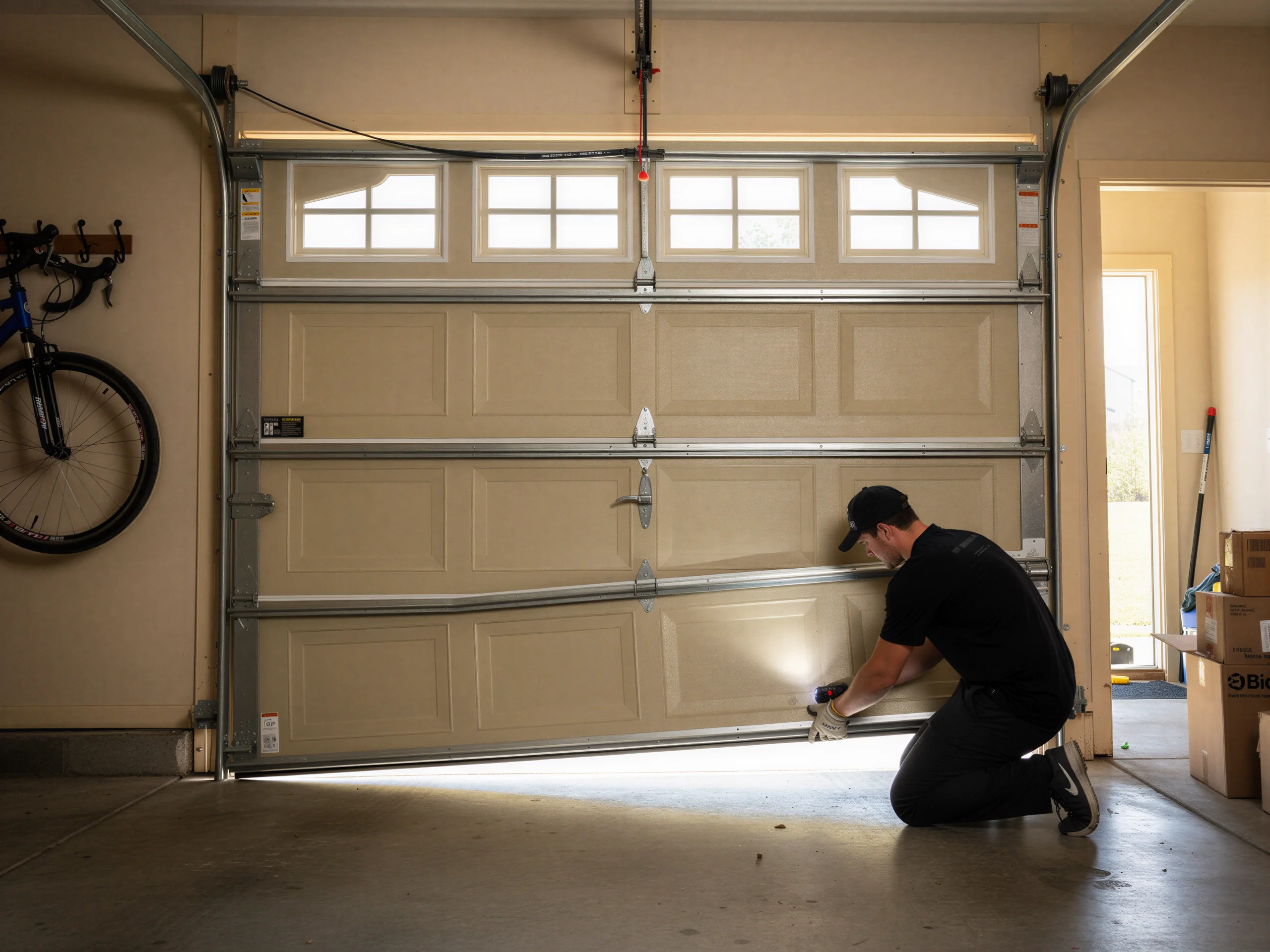
On a typical Deephaven call, we start by checking whether the hardware is original or already been replaced once. A house built around 1965 that's never had the door touched will usually still have extension springs and a narrower steel track than what's sold today - which means some replacement parts aren't a direct swap and the track itself may need to come out, not just the spring.
For homes where a previous owner already converted to torsion springs, the job looks more like what we'd do anywhere else in the area: measure the existing drum and cable, match the spring wind to the door weight, and check the bearing plate for wear before closing it back up.
Here's the honest limit: if the track is bent badly enough, or the door panels have rusted through at the bottom - which happens on older steel doors that sat low near grade for decades - replacing the spring won't fix the underlying problem.
At that point we'll tell you straight that a full door replacement is the better use of your money, rather than keep billing you for repairs on a door that's structurally done.
Questions
If your house dates to the mid-1960s like most of Deephaven, you're likely running original or early-replacement extension springs rather than torsion springs. Those have a shorter working life, and Minnesota's cold cycles add extra strain each winter. Once one has already failed, the second one is usually close behind - we can check both while we're there.
No. We work out of Minnetonka, about 4 miles away, and cover Deephaven from there along with the rest of the surrounding area. There's no separate local branch or dedicated response time for this town specifically.
Depends on condition. On doors from the 1960s, a bent or badly worn track often means the spring isn't the real problem - it's a symptom of the door running misaligned for years. If the track's gone, patching the spring alone won't hold.
It can. Deephaven's housing is mostly mid-1960s, but a handful of older or later homes exist too. The age of your specific garage door hardware matters more than the house's overall build year, so let us know what you know and we'll confirm on site.
Explore more
Ready when you are
Minnetonka Garage Door Pros repairs and installs garage doors, springs and openers in Minnetonka, MN and the surrounding area.